Main Page | Forums | Links | Site Copyright | Comments or Suggestions?

Delving into the Mind...... Welcome to CALROG.COM!

Related Links

Personal and Interpersonal Psychology
...
feel free to voice your thoughts in the Psychology Discussion Forum!

In a nutshell, psychology entails the thought and emotional processes of all animals.  Many psychologists work in fields that deal with people specifically, which unlike their colleagues in animal psychology,  have the ability to receive direct-feedback and/or input about a person's decision-making skills.  

In everyday life, people must make decisions about what to do, how to perform, and in some cases, negotiate and/or compromise their skills for societal reasons.  Some examples of societal reasons include: coherently transferring thought to an audience in a universally understandable fashion, and for some others, inhibit or disinhibit their skills based on the customs or accepted ethics of the group to whom he or she is speaking.  One's perception of his or her social group(s) may also shape how he or she may respond.  I (Carl S. Rogers) spend a lot of time separating two general forms of

Share with:
X  Facebook 

decision-making thought:  objectivity and subjectivity.  The former usually deals with goal-related activities of productive nature--and in my opinion withholding certain emotions until the task is finished (thus creating happiness), and on the flip-side there is subjectivity, which deals with how someone organises persons, places or things--in my opinion, emotions strongly contribute to the fashion in which one organises persons, places or things.  Listed below are some famous psychologists whose ideas help shape my theories of objectivity and subjectivity, and perhaps may help shape your individual theory as the journey of life unravels.  There are other psychologists who offer different and amazing theories--the Internet is chock full of biographies for several notable psychologists.  A great place to start is Google Search.

Relativity, relativity, relativity!!! 


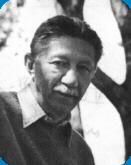
  Abraham Maslow:

Lifespan:  1908-70

Major Accomplishment:  established a  hierarchy of human needs, i.e.,  a fundamental theory that a person

Share with:
X  Facebook 

can achieve certain needs only when other needs have already been met.

Primary Realm of Interest:  Subjectivity
Search similar photos


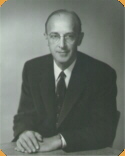
  Carl R Rogers:

Lifespan:  1902-87

Major Accomplishment:  introducing a new therapeutic approach called "client-centered therapy". During Rogers' sessions, he would not give advice or explanations to clients--rather, he'd give a listening ear to the client and paraphrase what he or she said.  Eventually, a client can clearly discover his or her own needs and/or  objectives, and ultimately he or she would create tools to implement his or her new outlook.

Primary Realms of Interest:  Objectivity & Subjectivity


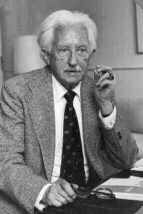
Erik Erikson:


Lifespan:  1902-94

Major Accomplishment:  presented the community with a list of loose objectives that the average person accomplishes at a series of defined age-groups, and what the expected outcome of each should provide.

Primary Realm of Interest:  Objectivity


About Carl R. Rogers by Maureen O'Hara

An Abraham Maslow Biography by Dr. C. George Boeree

Bryn Mawr Student Analyses Carl R. Rogers' Philosophy

Carl R. Rogers @ Wikipedia


Copyright Info listed here

Erik Erikson @ Wikipedia

Erik Erikson Links

Maslow's Take on Behaviourism: "Anyone Who Had a Baby Couldn't be a Behaviourist"

Notes on Abraham Maslow by Sonoma State University


Back to Main Page